Тренди
Бізнес
AI
AI Systems in a Geopolitical Conflict Era: Why Enterprise Risk Models Are Obsolete
AI Systems in a Geopolitical Conflict Era: Why Enterprise Risk Models Are Obsolete
Feb 28, 2026
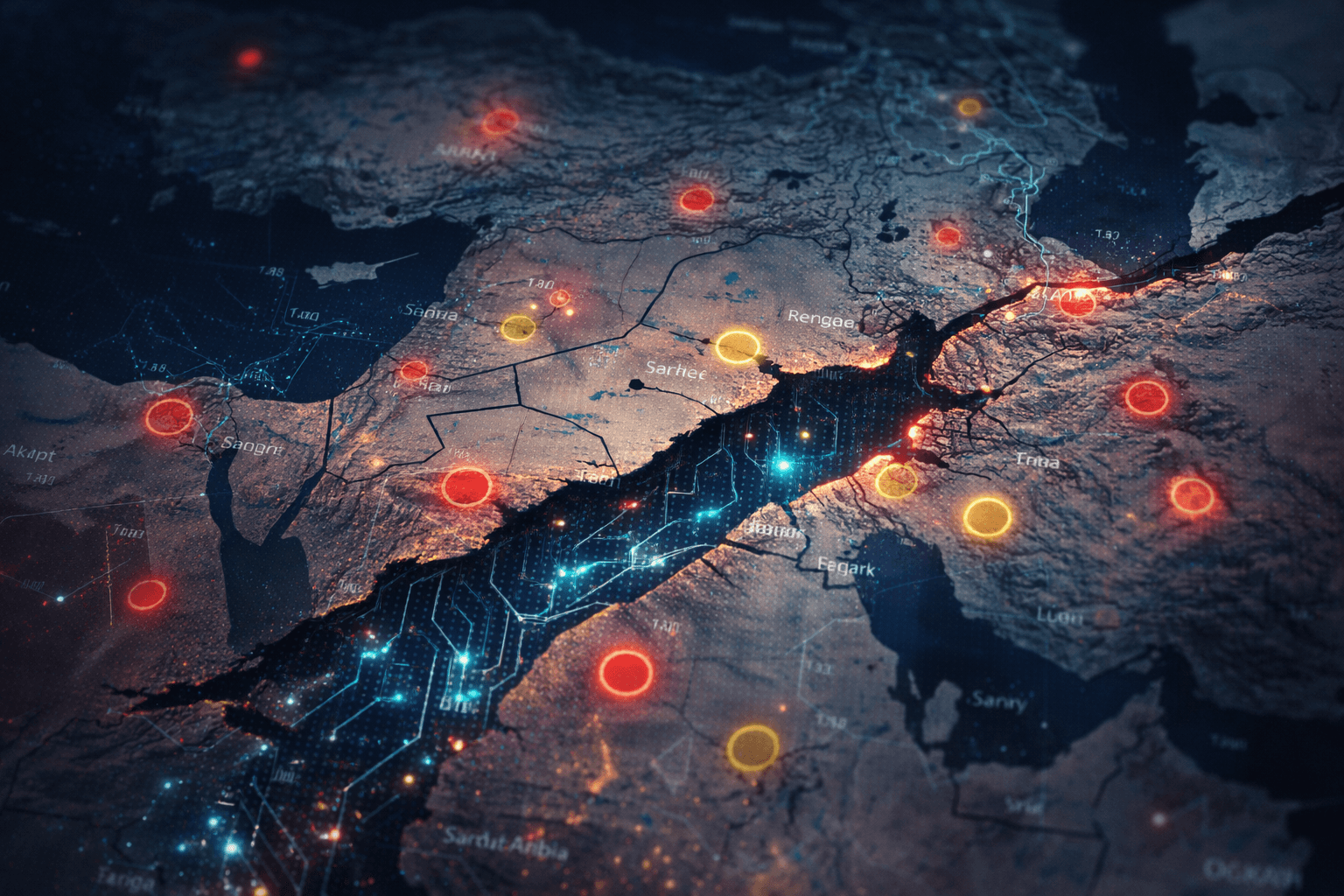
In recent months, global tensions have once again reminded enterprises of an uncomfortable reality: modern conflict does not begin with physical escalation. It begins with infrastructure.
Financial systems are probed. Telecommunications networks are tested. Cloud services experience anomalous traffic patterns. Coordinated cyber campaigns precede diplomatic statements.
And increasingly, AI systems sit directly inside that infrastructure.
For enterprises that have integrated AI into operations — customer communication, fraud detection, workflow automation, analytics — the risk model has fundamentally changed. Yet many organizations continue to assess AI risk using frameworks built for a far more stable geopolitical era.
That mismatch is becoming dangerous.
The Illusion of a Stable Digital Perimeter
Traditional enterprise cybersecurity assumes a bounded environment: identifiable endpoints, human users, known access patterns, and reasonably predictable adversaries.
AI systems break that assumption in three structural ways.
First, they rely on externalized infrastructure — hyperscaler clouds, model APIs, third-party inference providers. Very few enterprises operate fully sovereign AI stacks. Even private deployments often depend on GPU supply chains, global data routing, and model updates originating outside organizational control.
Second, AI introduces probabilistic behavior into core workflows. A deterministic billing system behaves the same way every time. A large language model embedded in customer support does not. Its output depends on prompts, context windows, retrieval layers, and runtime parameters — all dynamic.
Third, agentic AI systems expand execution surfaces. Once AI is authorized to act — updating records, triggering workflows, approving actions — it becomes part of the operational control plane.
In an era of geopolitical friction, these three shifts converge.
When state-aligned cyber actors target infrastructure, they do not need to “break into” a data center. They exploit dependencies, APIs, identity systems, or supply chain vulnerabilities. AI systems, by design, increase the number of such dependencies.
AI Supply Chains as Strategic Exposure
Recent conflicts have highlighted how deeply interconnected global digital infrastructure has become. Sanctions, export controls, chip restrictions, and cloud access policies are no longer abstract political instruments; they are operational variables.
AI systems depend on:
GPU manufacturing concentrated in limited geographies
Cloud regions subject to jurisdictional control
Model providers governed by national regulation
Open-source repositories vulnerable to poisoning or tampering
An enterprise deploying AI across CRM, ERP, and customer communication channels may unknowingly anchor critical operations to infrastructure whose continuity is not guaranteed under geopolitical stress.
The risk is not dramatic overnight shutdown. It is partial degradation: throttled API access, delayed model updates, regional service instability, or regulatory constraints that alter data routing.
For AI-enabled workflows operating at scale, even subtle latency or reliability shifts can cascade into operational disruption.
Most enterprise risk registers do not yet account for this category.
From Cybersecurity to Strategic Resilience
Cybersecurity teams traditionally focus on intrusion detection, malware, and network defense. In the current environment, that lens is too narrow.
When geopolitical tensions rise, cyber campaigns often target:
financial transaction systems
telecommunications routing
identity and authentication services
cloud management planes
large-scale SaaS providers
AI systems intersect with each of these.
An AI-driven fraud detection engine depends on transaction integrity.
An AI customer support agent depends on identity verification systems.
An AI workflow automation layer depends on API availability.
If upstream systems are destabilized — whether through attack, sanctions, or infrastructure strain — AI becomes a multiplier of instability rather than a stabilizer.
This is not a theoretical scenario. Over the past decade, major conflicts have consistently included coordinated cyber operations targeting civilian and commercial infrastructure. Enterprises operating in globally distributed environments must assume that AI systems will be exposed to the same threat landscape.
Agentic Systems and the Expanded Blast Radius
The risk intensifies when AI systems move from advisory roles to execution authority.
An AI assistant that drafts responses is one thing.
An AI agent authorized to modify records, trigger payments, or reconfigure logistics pipelines is another.
In such architectures, compromise does not require full system breach. It may require only manipulation of inputs — poisoned data feeds, prompt injection through external channels, or identity spoofing at integration points.
Because agentic systems automate decision flows, the time between compromise and consequence shortens dramatically.
The “blast radius” expands not linearly, but exponentially, as AI propagates decisions across interconnected systems.
Under geopolitical stress, where adversaries may seek economic disruption rather than data theft, such automation layers become attractive targets.
Yet many enterprises still treat AI governance as a compliance function rather than as a resilience function.
Why Traditional Enterprise Risk Models No Longer Suffice
Enterprise risk frameworks historically categorize threats into financial, operational, regulatory, and cyber domains.
AI collapses these boundaries.
A model manipulation incident can trigger regulatory exposure.
A cloud access disruption can create revenue loss.
A sanctions shift can alter infrastructure legality overnight.
A misinformation campaign can undermine customer trust through AI-generated impersonation.
Risk is no longer siloed. It is systemic.
In a geopolitically fragmented world, AI systems amplify interdependence. Enterprises must therefore move from static risk assessment to continuous resilience modeling.
This means asking different questions:
Which AI workflows depend on cross-border infrastructure?
What percentage of revenue relies on AI-mediated systems?
Can critical AI components fail gracefully?
Do we maintain model and inference redundancy across jurisdictions?
Is there visibility into third-party model updates?
Few organizations can confidently answer these today.
The Strategic Imperative: Designing for Uncertainty
The current global environment signals a structural shift. Technology supply chains are becoming politicized. Cloud infrastructure is no longer neutral territory. Cyber operations are embedded in geopolitical strategy.
AI systems sit at the intersection of all three.
Enterprises that integrated AI for efficiency must now evaluate it for survivability.
Resilience requires:
diversified infrastructure strategies
model governance tied to geopolitical exposure
architectural isolation of high-risk automation layers
explicit “kill-switch” mechanisms for agentic systems
continuous monitoring of external dependency risk
AI cannot remain a performance optimization layer. It must be treated as critical infrastructure.
A Quiet but Decisive Turning Point
The recent escalation of global tensions is a reminder that digital systems are no longer insulated from geopolitical volatility.
For enterprises, the most significant shift is not technical but strategic: AI risk is no longer confined to model bias or data privacy. It now intersects with national security dynamics, trade policy, and cyber conflict.
Organizations that continue to evaluate AI through a narrow technical lens will find their risk models increasingly obsolete.
Those that integrate geopolitical resilience into AI governance will be better positioned to operate — not just efficiently — but securely in an unstable world.
In the conflict era, AI systems are not merely tools of productivity.
They are components of infrastructure.
And infrastructure must be designed to withstand pressure.
In recent months, global tensions have once again reminded enterprises of an uncomfortable reality: modern conflict does not begin with physical escalation. It begins with infrastructure.
Financial systems are probed. Telecommunications networks are tested. Cloud services experience anomalous traffic patterns. Coordinated cyber campaigns precede diplomatic statements.
And increasingly, AI systems sit directly inside that infrastructure.
For enterprises that have integrated AI into operations — customer communication, fraud detection, workflow automation, analytics — the risk model has fundamentally changed. Yet many organizations continue to assess AI risk using frameworks built for a far more stable geopolitical era.
That mismatch is becoming dangerous.
The Illusion of a Stable Digital Perimeter
Traditional enterprise cybersecurity assumes a bounded environment: identifiable endpoints, human users, known access patterns, and reasonably predictable adversaries.
AI systems break that assumption in three structural ways.
First, they rely on externalized infrastructure — hyperscaler clouds, model APIs, third-party inference providers. Very few enterprises operate fully sovereign AI stacks. Even private deployments often depend on GPU supply chains, global data routing, and model updates originating outside organizational control.
Second, AI introduces probabilistic behavior into core workflows. A deterministic billing system behaves the same way every time. A large language model embedded in customer support does not. Its output depends on prompts, context windows, retrieval layers, and runtime parameters — all dynamic.
Third, agentic AI systems expand execution surfaces. Once AI is authorized to act — updating records, triggering workflows, approving actions — it becomes part of the operational control plane.
In an era of geopolitical friction, these three shifts converge.
When state-aligned cyber actors target infrastructure, they do not need to “break into” a data center. They exploit dependencies, APIs, identity systems, or supply chain vulnerabilities. AI systems, by design, increase the number of such dependencies.
AI Supply Chains as Strategic Exposure
Recent conflicts have highlighted how deeply interconnected global digital infrastructure has become. Sanctions, export controls, chip restrictions, and cloud access policies are no longer abstract political instruments; they are operational variables.
AI systems depend on:
GPU manufacturing concentrated in limited geographies
Cloud regions subject to jurisdictional control
Model providers governed by national regulation
Open-source repositories vulnerable to poisoning or tampering
An enterprise deploying AI across CRM, ERP, and customer communication channels may unknowingly anchor critical operations to infrastructure whose continuity is not guaranteed under geopolitical stress.
The risk is not dramatic overnight shutdown. It is partial degradation: throttled API access, delayed model updates, regional service instability, or regulatory constraints that alter data routing.
For AI-enabled workflows operating at scale, even subtle latency or reliability shifts can cascade into operational disruption.
Most enterprise risk registers do not yet account for this category.
From Cybersecurity to Strategic Resilience
Cybersecurity teams traditionally focus on intrusion detection, malware, and network defense. In the current environment, that lens is too narrow.
When geopolitical tensions rise, cyber campaigns often target:
financial transaction systems
telecommunications routing
identity and authentication services
cloud management planes
large-scale SaaS providers
AI systems intersect with each of these.
An AI-driven fraud detection engine depends on transaction integrity.
An AI customer support agent depends on identity verification systems.
An AI workflow automation layer depends on API availability.
If upstream systems are destabilized — whether through attack, sanctions, or infrastructure strain — AI becomes a multiplier of instability rather than a stabilizer.
This is not a theoretical scenario. Over the past decade, major conflicts have consistently included coordinated cyber operations targeting civilian and commercial infrastructure. Enterprises operating in globally distributed environments must assume that AI systems will be exposed to the same threat landscape.
Agentic Systems and the Expanded Blast Radius
The risk intensifies when AI systems move from advisory roles to execution authority.
An AI assistant that drafts responses is one thing.
An AI agent authorized to modify records, trigger payments, or reconfigure logistics pipelines is another.
In such architectures, compromise does not require full system breach. It may require only manipulation of inputs — poisoned data feeds, prompt injection through external channels, or identity spoofing at integration points.
Because agentic systems automate decision flows, the time between compromise and consequence shortens dramatically.
The “blast radius” expands not linearly, but exponentially, as AI propagates decisions across interconnected systems.
Under geopolitical stress, where adversaries may seek economic disruption rather than data theft, such automation layers become attractive targets.
Yet many enterprises still treat AI governance as a compliance function rather than as a resilience function.
Why Traditional Enterprise Risk Models No Longer Suffice
Enterprise risk frameworks historically categorize threats into financial, operational, regulatory, and cyber domains.
AI collapses these boundaries.
A model manipulation incident can trigger regulatory exposure.
A cloud access disruption can create revenue loss.
A sanctions shift can alter infrastructure legality overnight.
A misinformation campaign can undermine customer trust through AI-generated impersonation.
Risk is no longer siloed. It is systemic.
In a geopolitically fragmented world, AI systems amplify interdependence. Enterprises must therefore move from static risk assessment to continuous resilience modeling.
This means asking different questions:
Which AI workflows depend on cross-border infrastructure?
What percentage of revenue relies on AI-mediated systems?
Can critical AI components fail gracefully?
Do we maintain model and inference redundancy across jurisdictions?
Is there visibility into third-party model updates?
Few organizations can confidently answer these today.
The Strategic Imperative: Designing for Uncertainty
The current global environment signals a structural shift. Technology supply chains are becoming politicized. Cloud infrastructure is no longer neutral territory. Cyber operations are embedded in geopolitical strategy.
AI systems sit at the intersection of all three.
Enterprises that integrated AI for efficiency must now evaluate it for survivability.
Resilience requires:
diversified infrastructure strategies
model governance tied to geopolitical exposure
architectural isolation of high-risk automation layers
explicit “kill-switch” mechanisms for agentic systems
continuous monitoring of external dependency risk
AI cannot remain a performance optimization layer. It must be treated as critical infrastructure.
A Quiet but Decisive Turning Point
The recent escalation of global tensions is a reminder that digital systems are no longer insulated from geopolitical volatility.
For enterprises, the most significant shift is not technical but strategic: AI risk is no longer confined to model bias or data privacy. It now intersects with national security dynamics, trade policy, and cyber conflict.
Organizations that continue to evaluate AI through a narrow technical lens will find their risk models increasingly obsolete.
Those that integrate geopolitical resilience into AI governance will be better positioned to operate — not just efficiently — but securely in an unstable world.
In the conflict era, AI systems are not merely tools of productivity.
They are components of infrastructure.
And infrastructure must be designed to withstand pressure.
Ready to transform your customer calls? Get started in minutes!
Automate call and order processing without involving operators