AI
January 2026 at HAPP: From “AI Assistant” to Managed Infrastructure
January 2026 at HAPP: From “AI Assistant” to Managed Infrastructure
Feb 12, 2026
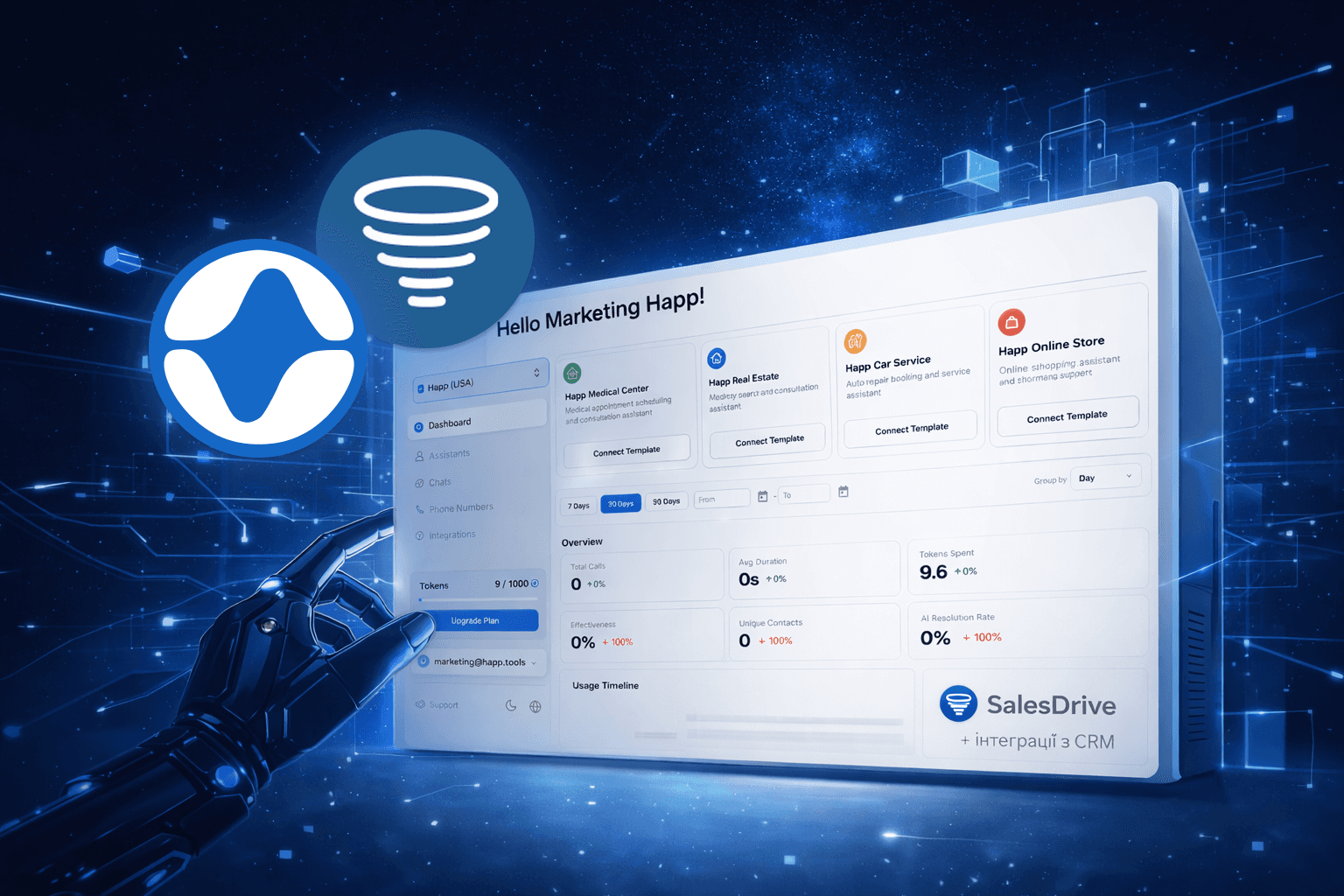
In many companies, AI is still perceived as a tool. An additional automation layer. A response channel. A bot that replaces an operator.
But in real businesses in 2026, AI plays a different role. It doesn’t just respond to customers — it works with CRM systems, creates deals, updates records, and triggers workflows. It becomes part of operational infrastructure.
That is the context in which we approached HAPP platform updates in January.
The goal was not to add “new features.”
The goal was to make AI more controllable, more integrated, and more production-ready.
More Control Over Assistant Behavior
One of the core problems with AI in business environments is generic behavior. The assistant sounds acceptable, but not aligned with a specific company. It functions logically, but not in the way operations teams expect.
In January, we introduced extended behavior settings. Businesses can now define communication style, scenario logic, and processing priorities with much greater precision.
This means that an assistant in healthcare, e-commerce, or B2B consulting can operate differently — not only at the tone level, but at the micro-decision level within conversations.
AI becomes aligned with business logic rather than functioning as a generic interface.
Asynchronous Execution as a Default Standard
In live interaction, pauses reduce trust.
Especially when an assistant needs to check order status or retrieve CRM data.
We introduced asynchronous tools. Long-running operations now execute in the background without blocking the conversation. The assistant can continue interacting, clarify details, or maintain engagement while the system retrieves required data.
For customers, this feels like a natural, uninterrupted dialogue.
For businesses, it means complex requests can be handled without latency friction.
This is critical when AI operates not as a demo, but as the primary communication layer.
More Advanced Automation Scenarios
We expanded the types of parameters that can be passed into tools. Technically, this means support for more complex data structures. Operationally, it enables deeper automation scenarios.
The assistant can now pass structured objects, nested parameters, and multi-level data. This allows for more advanced workflows — from flexible deal management to multi-step request processing.
AI moves beyond filtering messages.
It becomes an active participant in operational execution.
System Access Tokens: Stability Beyond Individual Users
In many companies, integrations are tied to individual employee accounts. When someone leaves, automation breaks.
We introduced system access tokens that are not linked to specific users. Integrations continue functioning regardless of personnel changes.
It is a technical improvement with significant operational impact — ensuring continuity and long-term stability of automated processes.
Expanding the Ecosystem: Messenger and Four CRM Integrations
January also marked significant integration expansion.
The assistant can now operate directly within Facebook Messenger, responding automatically 24/7. Social media inquiries no longer depend on human availability or working hours.
We also introduced integrations with NetHunt CRM, Odoo, KeyCRM, and SalesDrive. During a conversation, the assistant can search for customers, create leads, generate deals, and update records in real time.
Practically, this means one thing:
Conversation immediately becomes data. Data immediately becomes process.
No manual entry. No duplication. No loss of interaction history.
Full Integration Into Your Infrastructure
With call webhooks, conversation data can now be sent to analytics systems, billing platforms, ERP environments, or custom infrastructure.
HAPP is no longer a standalone tool.
It becomes part of the broader enterprise architecture.
Performance and Stability Improvements
We optimized the access token verification process, resulting in faster platform performance under load. In parallel, we improved media handling, corrected chat history timestamp display, optimized dialogue loading, and resolved message duplication issues.
These changes may not be visible at first glance, but they define whether a system is truly scalable.
Summary
In January 2026, HAPP introduced:
Facebook Messenger integration
Four new CRM integrations
Seven AI functionality enhancements
Five major stability and performance fixes
More importantly, the platform became more controllable, more flexible, and more deeply integrated.
AI in business is not a feature.
It is an infrastructure layer.
And that is the direction in which we continue to evolve HAPP.
In many companies, AI is still perceived as a tool. An additional automation layer. A response channel. A bot that replaces an operator.
But in real businesses in 2026, AI plays a different role. It doesn’t just respond to customers — it works with CRM systems, creates deals, updates records, and triggers workflows. It becomes part of operational infrastructure.
That is the context in which we approached HAPP platform updates in January.
The goal was not to add “new features.”
The goal was to make AI more controllable, more integrated, and more production-ready.
More Control Over Assistant Behavior
One of the core problems with AI in business environments is generic behavior. The assistant sounds acceptable, but not aligned with a specific company. It functions logically, but not in the way operations teams expect.
In January, we introduced extended behavior settings. Businesses can now define communication style, scenario logic, and processing priorities with much greater precision.
This means that an assistant in healthcare, e-commerce, or B2B consulting can operate differently — not only at the tone level, but at the micro-decision level within conversations.
AI becomes aligned with business logic rather than functioning as a generic interface.
Asynchronous Execution as a Default Standard
In live interaction, pauses reduce trust.
Especially when an assistant needs to check order status or retrieve CRM data.
We introduced asynchronous tools. Long-running operations now execute in the background without blocking the conversation. The assistant can continue interacting, clarify details, or maintain engagement while the system retrieves required data.
For customers, this feels like a natural, uninterrupted dialogue.
For businesses, it means complex requests can be handled without latency friction.
This is critical when AI operates not as a demo, but as the primary communication layer.
More Advanced Automation Scenarios
We expanded the types of parameters that can be passed into tools. Technically, this means support for more complex data structures. Operationally, it enables deeper automation scenarios.
The assistant can now pass structured objects, nested parameters, and multi-level data. This allows for more advanced workflows — from flexible deal management to multi-step request processing.
AI moves beyond filtering messages.
It becomes an active participant in operational execution.
System Access Tokens: Stability Beyond Individual Users
In many companies, integrations are tied to individual employee accounts. When someone leaves, automation breaks.
We introduced system access tokens that are not linked to specific users. Integrations continue functioning regardless of personnel changes.
It is a technical improvement with significant operational impact — ensuring continuity and long-term stability of automated processes.
Expanding the Ecosystem: Messenger and Four CRM Integrations
January also marked significant integration expansion.
The assistant can now operate directly within Facebook Messenger, responding automatically 24/7. Social media inquiries no longer depend on human availability or working hours.
We also introduced integrations with NetHunt CRM, Odoo, KeyCRM, and SalesDrive. During a conversation, the assistant can search for customers, create leads, generate deals, and update records in real time.
Practically, this means one thing:
Conversation immediately becomes data. Data immediately becomes process.
No manual entry. No duplication. No loss of interaction history.
Full Integration Into Your Infrastructure
With call webhooks, conversation data can now be sent to analytics systems, billing platforms, ERP environments, or custom infrastructure.
HAPP is no longer a standalone tool.
It becomes part of the broader enterprise architecture.
Performance and Stability Improvements
We optimized the access token verification process, resulting in faster platform performance under load. In parallel, we improved media handling, corrected chat history timestamp display, optimized dialogue loading, and resolved message duplication issues.
These changes may not be visible at first glance, but they define whether a system is truly scalable.
Summary
In January 2026, HAPP introduced:
Facebook Messenger integration
Four new CRM integrations
Seven AI functionality enhancements
Five major stability and performance fixes
More importantly, the platform became more controllable, more flexible, and more deeply integrated.
AI in business is not a feature.
It is an infrastructure layer.
And that is the direction in which we continue to evolve HAPP.
Ready to transform your customer calls? Get started in minutes!
Automate call and order processing without involving operators