Бізнес
AI
The Right Mental Model for AI in 2027 Is Infrastructure, Not Intelligence
The Right Mental Model for AI in 2027 Is Infrastructure, Not Intelligence
Jan 20, 2026
Why the intelligence framing no longer holds
For much of the current AI cycle, enterprises have been asking the wrong question. The debate has revolved around intelligence: how advanced the model is, how human the responses sound, how impressive the demonstrations look. This framing made sense when AI was something new to observe. It makes far less sense once AI becomes something businesses depend on.
By 2027, organizations that continue to evaluate AI primarily through the lens of intelligence will struggle to extract durable value. Not because the technology failed to evolve, but because the mental model never caught up with what AI actually became inside the enterprise.
The companies that succeed will stop treating AI as intelligence to be admired and start treating it as infrastructure to be designed, governed, and maintained.
How every foundational technology made this transition
This shift is not unique to AI. It follows a familiar pattern.
In the early days of databases, organizations debated query languages and optimization tricks. Eventually, those discussions faded. What mattered was whether the database could handle load, recover from failure, and remain consistent under stress.
Cloud computing followed the same arc. Virtualization was once the headline; operational resilience became the reality. No executive today chooses cloud infrastructure based on how “clever” it is. They choose it based on reliability, cost curves, and failure behavior.
AI is now entering the same phase.
What changes over the next two years is not the pace of model innovation, but how AI is positioned inside operating systems. As AI moves deeper into workflows, intelligence becomes less important than reliability, integration, and control.
Where the intelligence-first mindset breaks at scale
The intelligence framing collapses precisely when enterprises try to scale.
As long as AI remains a pilot or a side experiment, fluency and creativity feel like meaningful metrics. Once AI touches revenue flows, customer communication, compliance processes, or operational execution, those metrics lose relevance.
At that point, enterprises begin to ask different questions:
Can this system behave predictably under pressure?
Can failures be observed before customers notice?
Can outcomes be measured and improved over time?
This is where many AI initiatives quietly stall. Models are introduced into environments that were never designed for autonomous or semi-autonomous decision-making. Failures are rarely dramatic enough to trigger alarms, yet frequent enough to erode trust. What emerges is a growing layer of fragile automation that looks functional but resists expansion.
Infrastructure thinking explains why some AI systems survive this phase while others collapse.
From answers to execution: the real shift underway
The most consequential change between now and 2027 is that AI will increasingly stop answering questions and start running processes.
When AI systems are responsible for confirming orders, routing customer requests, escalating exceptions, reconciling data, or triggering downstream actions, errors no longer remain contained. They propagate.
At that moment, intelligence becomes secondary. What matters is how failures are bounded, observed, and corrected.
This is why enterprises are moving away from the language of “assistants” and toward the language of agents, orchestration, and execution layers. The terminology reflects a structural reality: once AI can act across multiple systems, it becomes part of the production fabric.
And production systems are judged by very different standards.
One unavoidable list: what infrastructure-grade AI must do
At enterprise scale, AI that behaves like infrastructure is expected to do a small number of things exceptionally well:
operate predictably under variable load
integrate deeply with existing systems rather than sit beside them
expose its actions through logs and metrics
fail in bounded, reversible ways
improve outcomes through feedback, not guesswork
Anything that cannot meet these expectations may be impressive, but it will not be trusted.
A ranking that explains who scales AI and who doesn’t
By 2027, enterprises will quietly fall into three groups—not by ambition, but by mental model:
Tier 1: AI as infrastructure
Organizations that treat AI like a core system component. These companies redesign workflows, define ownership, instrument outcomes, and allow AI to disappear into operations. Value compounds over time.
Tier 2: AI as tooling
Organizations that deploy AI as a set of productivity tools or assistants. They see localized efficiency gains, but struggle to scale impact across the business.
Tier 3: AI as experimentation
Organizations that continue to pilot endlessly. Demos look good. Production impact remains marginal. Spend accumulates without leverage.
The gap between these tiers will widen, not narrow.
Why better models won’t save the wrong mental model
Another reason the intelligence framing fails is commoditization.
By 2027, access to strong models will not differentiate enterprises. Model quality will converge faster than organizational capability. Competitive advantage will come from coordination, not raw intelligence: how quickly insights turn into actions, how smoothly systems interact, and how consistently outcomes improve.
This mirrors earlier technology waves. Databases did not reward companies that admired expressive query languages. Cloud did not reward those who endlessly experimented with virtual machines. In both cases, advantage accrued to organizations that redesigned operations around the technology.
AI is no different.
The enterprise stack in 2027: where AI actually sits
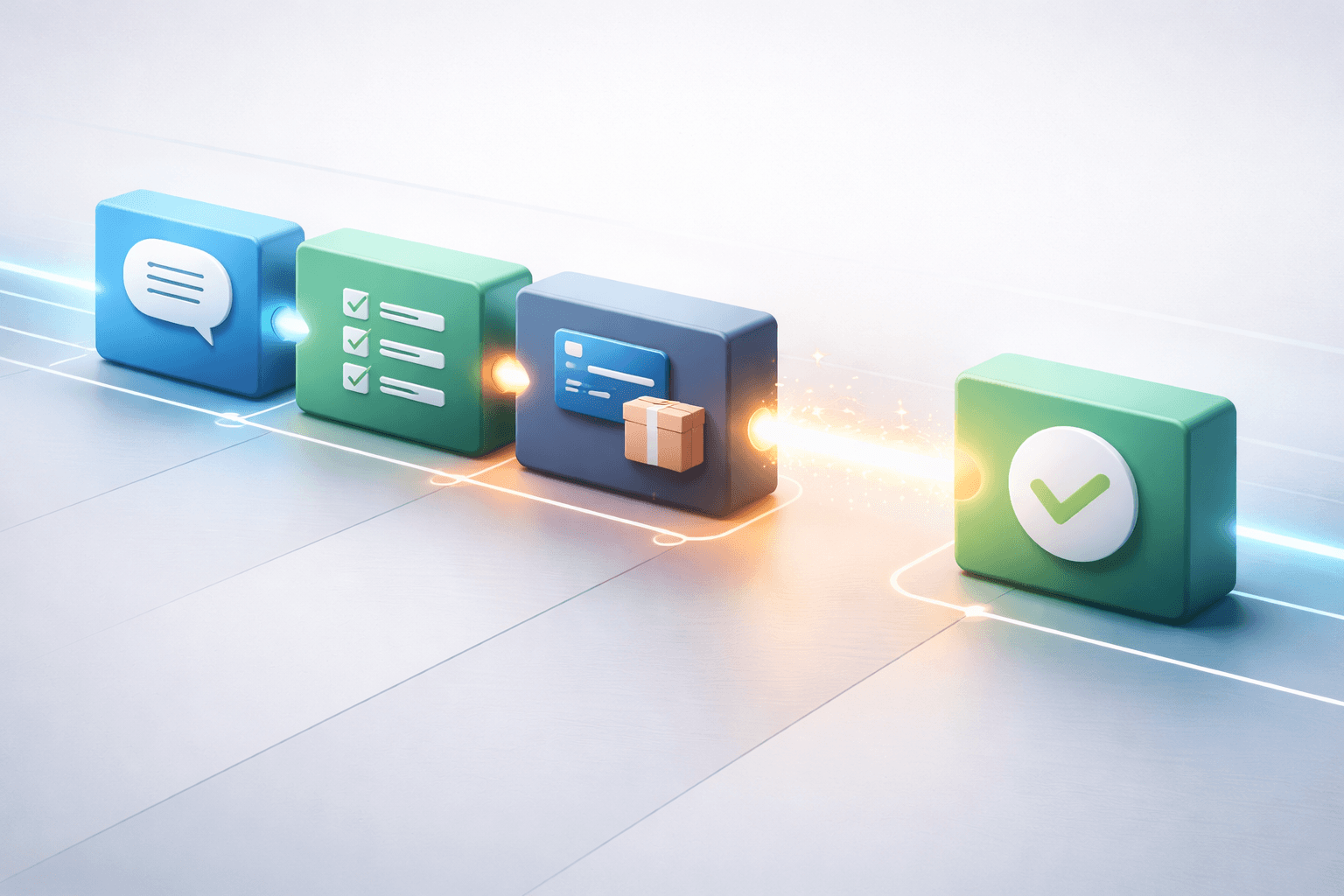
In 2027, AI will not sit “on top” of the enterprise stack as a smart interface. It will sit between systems, mediating between signals and responses, intent and execution.
This layer will interpret inputs, coordinate actions, enforce business rules, log outcomes, and feed continuous improvement. Seen this way, AI resembles middleware more than intelligence. It is closer to orchestration engines and workflow systems than to chat interfaces.
Organizations that recognize this design for longevity. Those that don’t keep rebuilding fragile solutions on top of impressive models.
The leadership implication no one can delegate
For enterprise leaders, the conclusion is uncomfortable but clear.
AI strategy is no longer about adoption. It is about architecture.
The central questions are not technical curiosities, but operational commitments: which decisions are delegated, which actions are automated, who owns the outcomes, and how failure is handled.
These are not questions models can answer. They are questions leadership must.
By 2027, companies that retain the wrong mental model will not fail spectacularly. They will accumulate brittle systems, silent inefficiencies, and AI spend that never compounds into advantage.
Those that adopt the infrastructure mindset will build systems that quietly improve over time—reliable, governed, measurable, and indispensable. That is how infrastructure always works. Its value is not in how intelligent it appears, but in how difficult it becomes to imagine operating without it.
Why the intelligence framing no longer holds
For much of the current AI cycle, enterprises have been asking the wrong question. The debate has revolved around intelligence: how advanced the model is, how human the responses sound, how impressive the demonstrations look. This framing made sense when AI was something new to observe. It makes far less sense once AI becomes something businesses depend on.
By 2027, organizations that continue to evaluate AI primarily through the lens of intelligence will struggle to extract durable value. Not because the technology failed to evolve, but because the mental model never caught up with what AI actually became inside the enterprise.
The companies that succeed will stop treating AI as intelligence to be admired and start treating it as infrastructure to be designed, governed, and maintained.
How every foundational technology made this transition
This shift is not unique to AI. It follows a familiar pattern.
In the early days of databases, organizations debated query languages and optimization tricks. Eventually, those discussions faded. What mattered was whether the database could handle load, recover from failure, and remain consistent under stress.
Cloud computing followed the same arc. Virtualization was once the headline; operational resilience became the reality. No executive today chooses cloud infrastructure based on how “clever” it is. They choose it based on reliability, cost curves, and failure behavior.
AI is now entering the same phase.
What changes over the next two years is not the pace of model innovation, but how AI is positioned inside operating systems. As AI moves deeper into workflows, intelligence becomes less important than reliability, integration, and control.
Where the intelligence-first mindset breaks at scale
The intelligence framing collapses precisely when enterprises try to scale.
As long as AI remains a pilot or a side experiment, fluency and creativity feel like meaningful metrics. Once AI touches revenue flows, customer communication, compliance processes, or operational execution, those metrics lose relevance.
At that point, enterprises begin to ask different questions:
Can this system behave predictably under pressure?
Can failures be observed before customers notice?
Can outcomes be measured and improved over time?
This is where many AI initiatives quietly stall. Models are introduced into environments that were never designed for autonomous or semi-autonomous decision-making. Failures are rarely dramatic enough to trigger alarms, yet frequent enough to erode trust. What emerges is a growing layer of fragile automation that looks functional but resists expansion.
Infrastructure thinking explains why some AI systems survive this phase while others collapse.
From answers to execution: the real shift underway
The most consequential change between now and 2027 is that AI will increasingly stop answering questions and start running processes.
When AI systems are responsible for confirming orders, routing customer requests, escalating exceptions, reconciling data, or triggering downstream actions, errors no longer remain contained. They propagate.
At that moment, intelligence becomes secondary. What matters is how failures are bounded, observed, and corrected.
This is why enterprises are moving away from the language of “assistants” and toward the language of agents, orchestration, and execution layers. The terminology reflects a structural reality: once AI can act across multiple systems, it becomes part of the production fabric.
And production systems are judged by very different standards.
One unavoidable list: what infrastructure-grade AI must do
At enterprise scale, AI that behaves like infrastructure is expected to do a small number of things exceptionally well:
operate predictably under variable load
integrate deeply with existing systems rather than sit beside them
expose its actions through logs and metrics
fail in bounded, reversible ways
improve outcomes through feedback, not guesswork
Anything that cannot meet these expectations may be impressive, but it will not be trusted.
A ranking that explains who scales AI and who doesn’t
By 2027, enterprises will quietly fall into three groups—not by ambition, but by mental model:
Tier 1: AI as infrastructure
Organizations that treat AI like a core system component. These companies redesign workflows, define ownership, instrument outcomes, and allow AI to disappear into operations. Value compounds over time.
Tier 2: AI as tooling
Organizations that deploy AI as a set of productivity tools or assistants. They see localized efficiency gains, but struggle to scale impact across the business.
Tier 3: AI as experimentation
Organizations that continue to pilot endlessly. Demos look good. Production impact remains marginal. Spend accumulates without leverage.
The gap between these tiers will widen, not narrow.
Why better models won’t save the wrong mental model
Another reason the intelligence framing fails is commoditization.
By 2027, access to strong models will not differentiate enterprises. Model quality will converge faster than organizational capability. Competitive advantage will come from coordination, not raw intelligence: how quickly insights turn into actions, how smoothly systems interact, and how consistently outcomes improve.
This mirrors earlier technology waves. Databases did not reward companies that admired expressive query languages. Cloud did not reward those who endlessly experimented with virtual machines. In both cases, advantage accrued to organizations that redesigned operations around the technology.
AI is no different.
The enterprise stack in 2027: where AI actually sits
In 2027, AI will not sit “on top” of the enterprise stack as a smart interface. It will sit between systems, mediating between signals and responses, intent and execution.
This layer will interpret inputs, coordinate actions, enforce business rules, log outcomes, and feed continuous improvement. Seen this way, AI resembles middleware more than intelligence. It is closer to orchestration engines and workflow systems than to chat interfaces.
Organizations that recognize this design for longevity. Those that don’t keep rebuilding fragile solutions on top of impressive models.
The leadership implication no one can delegate
For enterprise leaders, the conclusion is uncomfortable but clear.
AI strategy is no longer about adoption. It is about architecture.
The central questions are not technical curiosities, but operational commitments: which decisions are delegated, which actions are automated, who owns the outcomes, and how failure is handled.
These are not questions models can answer. They are questions leadership must.
By 2027, companies that retain the wrong mental model will not fail spectacularly. They will accumulate brittle systems, silent inefficiencies, and AI spend that never compounds into advantage.
Those that adopt the infrastructure mindset will build systems that quietly improve over time—reliable, governed, measurable, and indispensable. That is how infrastructure always works. Its value is not in how intelligent it appears, but in how difficult it becomes to imagine operating without it.
Ready to transform your customer calls? Get started in minutes!
Automate call and order processing without involving operators