AI
What’s Next for HAPP: Media Intelligence and Dynamic AI Model Switching
What’s Next for HAPP: Media Intelligence and Dynamic AI Model Switching
Feb 21, 2026
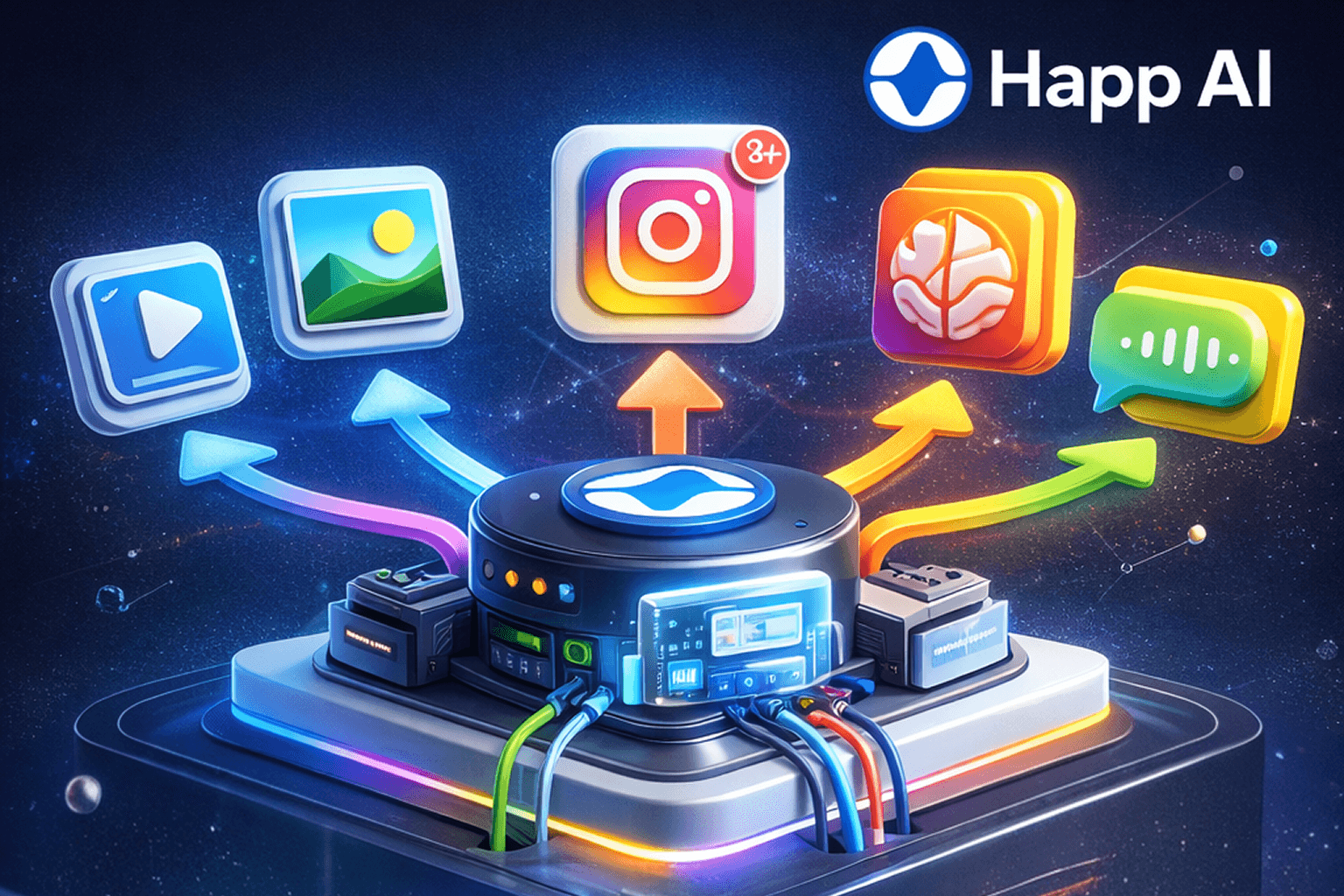
If January was about strengthening the infrastructure layer, the next phase is about expanding cognitive capability.
AI assistants are no longer limited to text and voice. Customers send screenshots, product photos, videos, voice notes, and Instagram Stories. Communication has become multimodal, but automation in most businesses has not.
At the same time, enterprises are facing a different challenge: model efficiency. Not every request requires the most powerful model. Not every scenario tolerates delay. Cost, latency, and reasoning depth must be balanced dynamically.
The next stage of HAPP addresses both realities.
From Text-Based Assistants to Media-Aware AI
Today, most automated communication systems treat images and video as attachments. They are stored, forwarded, or manually reviewed.
We are building full media processing capabilities across all communication channels.
This includes:
Photo analysis and interpretation
Video file handling
Instagram Stories processing
Image content and context recognition
The objective is not media storage. It is contextual understanding.
When a customer sends a photo of a damaged product, the assistant should understand it is a warranty case. When a user shares a screenshot of an error message, the assistant should recognize the context and trigger the correct support workflow. When a client sends a product image, the assistant should identify it and activate relevant consultation scenarios.
This fundamentally changes automation boundaries.
In e-commerce, media-aware AI enables automated returns, product verification, and visual catalog matching.
In customer support, it allows issue diagnosis without human intervention.
In sales, it supports contextual upselling based on shared visual content.
AI moves from text interpretation to real-world signal processing.
Instagram and Social Context Recognition
One of the most complex environments in modern customer communication is Instagram. Stories, temporary content, screenshots, and visual replies create fragmented interactions.
We are developing capabilities that allow the assistant to:
Interpret Instagram Stories contextually
Recognize visual intent
Extract meaning from shared content
Trigger appropriate automation scenarios
This is particularly relevant for brands operating in retail, beauty, hospitality, and lifestyle industries, where visual communication dominates.
The assistant will not simply respond. It will understand what was shown.
Dynamic AI Model Switching
The second major direction focuses on efficiency and adaptability.
In most AI deployments today, one model handles everything — simple FAQs and complex analytical tasks alike. This approach is inefficient.
We are introducing dynamic AI model selection based on task complexity and conversational context.
In practical terms:
Lightweight models handle fast, simple responses
More advanced models activate for complex reasoning
Switching can occur automatically or manually
Transitions happen without interrupting the conversation
This architecture allows businesses to balance cost, speed, and quality in real time.
A basic availability question does not require deep analytical reasoning. A complex multi-step consultation does. The system should allocate resources accordingly.
Dynamic switching enables:
Cost optimization
Reduced latency
Improved response quality in high-complexity scenarios
Better scalability under load
Instead of a single static intelligence layer, assistants become adaptive systems.
Toward Adaptive, Contextual Infrastructure
Together, media intelligence and dynamic model switching represent a structural shift.
Assistants evolve from text-based responders into multimodal interpreters.
AI evolves from static deployment into adaptive orchestration.
For businesses, this means:
Automation that understands what customers actually send
Infrastructure that optimizes itself depending on context
Reduced operational costs without compromising quality
Greater control over performance and scalability
The next phase of HAPP is not about adding channels.
It is about deepening cognitive capability while maintaining architectural efficiency.
AI as infrastructure must be both intelligent and adaptive.
That is the direction we are building toward.
If January was about strengthening the infrastructure layer, the next phase is about expanding cognitive capability.
AI assistants are no longer limited to text and voice. Customers send screenshots, product photos, videos, voice notes, and Instagram Stories. Communication has become multimodal, but automation in most businesses has not.
At the same time, enterprises are facing a different challenge: model efficiency. Not every request requires the most powerful model. Not every scenario tolerates delay. Cost, latency, and reasoning depth must be balanced dynamically.
The next stage of HAPP addresses both realities.
From Text-Based Assistants to Media-Aware AI
Today, most automated communication systems treat images and video as attachments. They are stored, forwarded, or manually reviewed.
We are building full media processing capabilities across all communication channels.
This includes:
Photo analysis and interpretation
Video file handling
Instagram Stories processing
Image content and context recognition
The objective is not media storage. It is contextual understanding.
When a customer sends a photo of a damaged product, the assistant should understand it is a warranty case. When a user shares a screenshot of an error message, the assistant should recognize the context and trigger the correct support workflow. When a client sends a product image, the assistant should identify it and activate relevant consultation scenarios.
This fundamentally changes automation boundaries.
In e-commerce, media-aware AI enables automated returns, product verification, and visual catalog matching.
In customer support, it allows issue diagnosis without human intervention.
In sales, it supports contextual upselling based on shared visual content.
AI moves from text interpretation to real-world signal processing.
Instagram and Social Context Recognition
One of the most complex environments in modern customer communication is Instagram. Stories, temporary content, screenshots, and visual replies create fragmented interactions.
We are developing capabilities that allow the assistant to:
Interpret Instagram Stories contextually
Recognize visual intent
Extract meaning from shared content
Trigger appropriate automation scenarios
This is particularly relevant for brands operating in retail, beauty, hospitality, and lifestyle industries, where visual communication dominates.
The assistant will not simply respond. It will understand what was shown.
Dynamic AI Model Switching
The second major direction focuses on efficiency and adaptability.
In most AI deployments today, one model handles everything — simple FAQs and complex analytical tasks alike. This approach is inefficient.
We are introducing dynamic AI model selection based on task complexity and conversational context.
In practical terms:
Lightweight models handle fast, simple responses
More advanced models activate for complex reasoning
Switching can occur automatically or manually
Transitions happen without interrupting the conversation
This architecture allows businesses to balance cost, speed, and quality in real time.
A basic availability question does not require deep analytical reasoning. A complex multi-step consultation does. The system should allocate resources accordingly.
Dynamic switching enables:
Cost optimization
Reduced latency
Improved response quality in high-complexity scenarios
Better scalability under load
Instead of a single static intelligence layer, assistants become adaptive systems.
Toward Adaptive, Contextual Infrastructure
Together, media intelligence and dynamic model switching represent a structural shift.
Assistants evolve from text-based responders into multimodal interpreters.
AI evolves from static deployment into adaptive orchestration.
For businesses, this means:
Automation that understands what customers actually send
Infrastructure that optimizes itself depending on context
Reduced operational costs without compromising quality
Greater control over performance and scalability
The next phase of HAPP is not about adding channels.
It is about deepening cognitive capability while maintaining architectural efficiency.
AI as infrastructure must be both intelligent and adaptive.
That is the direction we are building toward.
Ready to transform your customer calls? Get started in minutes!
Automate call and order processing without involving operators